Author: Md. Abdun Nur
Institution: Dhaka University of Engineering and Technology, Gazipur
Abstract
This study explores the development of anti-allergic textiles using natural compounds extracted from Indian Jujube (Ziziphus mauritiana) leaves. Aiming to provide a chemical-free and eco-friendly alternative to conventional allergy-resistant fabrics, the leaves were processed through hydro-alcoholic extraction. The extract was applied to cotton fabrics using two methods: pad-dry-cure and exhaust. Treated samples were assessed for colorfastness, moisture management, and anti-allergic properties. Test results indicated minimal changes in fabric structure and moisture performance, confirming the stability of treatment. FTIR analysis showed close similarity between treated fabric and leaf compounds, confirming natural bonding without synthetic additives. Patch tests on volunteers with dust and food allergies revealed significantly reduced allergic reactions, even after multiple washes. These findings demonstrate the effectiveness and durability of the treatment. This research highlights Indian Jujube extract as a viable, plant-based solution for producing hypoallergenic fabrics, offering both functional benefits and environmental sustainability in future textile applications.
Keywords: Medicinal compound; Indian jujube leaf; Anti-allergic; Cellulosic;
Introduction
Allergies are hypersensitive immune responses to harmless substances, such as pollen, food, pet dander, insect stings, or medications. When exposed to an allergen, the immune system overreacts, producing symptoms ranging from mild to severe. There are no naturally eliminated fabrics, but synthetic materials like polyester and nylon can trap moisture and heat, exacerbating allergic reactions. The immune system’s primary role is to protect the body from harmful substances, but in individuals with allergies, it mistakenly identifies a harmless substance as a threat. When an allergen enters the body, it triggers the production of specific antibodies called Immunoglobulin E (IgE), which attach themselves to mast cells in the skin, lungs, and digestive system. Upon subsequent exposure, these mast cells release histamine and other chemicals into the bloodstream, causing allergic reactions. The severity and type of symptoms depend on the type of allergen, exposure method, and the individual’s sensitivity.
Ziziphus mauritiana leaves contain flavonoids, saponins, alkaloids, tannins, and phenolic acids that contribute to their anti-allergic properties. These compounds inhibit mast cell degranulation, histamine release, and pro-inflammatory cytokines, offering relief from allergic reactions by stabilizing immune responses. Allergies can be triggered by environmental allergens, food allergens, insect stings, and drug allergens.
The Promise of Bio-Based Textiles
Bio-based textiles are developed using renewable biological resources such as algae, mushrooms, hemp, or plant-based extracts. These textiles are gaining momentum as viable alternatives to conventional synthetic or chemically processed fabrics. Beyond sustainability, they also offer enhanced functionality, including antimicrobial, UV-resistant, or hypoallergenic properties. This shift is crucial as synthetic additives in fabrics are known to cause skin irritation and long-term environmental harm. While materials like mycelium leather and algae-based fibers lead global headlines, regional plants like Indian Jujube offer localized, affordable, and effective solutions for functional textile innovation.
Bioactive Compounds in Indian Jujube Leaf
Research has identified several bioactive compounds in Indian Jujube leaves, including flavonoids, saponins, alkaloids, and polyphenols, which contribute to its medicinal properties. Among these, flavonoids are particularly noted for their anti-inflammatory and anti-allergic effects. A study by Singh et al. (2016) indicated that quercetin, a prominent flavonoid in Z. mauritiana, plays a vital role in stabilizing mast cells, thereby preventing the release of histamine, a key mediator in allergic reactions [3].
Mechanism of Anti-Allergic Action
Indian Jujube leaf has been found to have anti-allergic properties due to its ability to inhibit the release of histamine from mast cells, a crucial step in the allergic response. An in vivo study by Sharma et al. (2018) showed that the extract reduced histamine levels in animal models and modulated the immune response by suppressing the activity of Th2 cells involved in allergic condition pathogenesis.
Materials:
- Fabric: The sample fabric was collected from Jaber & Jubair Fabrics Ltd. The GSM of the fabric is 160 GSM, and the type of fabric is single jersey, scoured and bleached white sample. Yarn count 28 count (single yarn).
- Chemicals: Ethanol was procured from Tongi Chemical Market. The purity of the ethanol is 98%.
- Indian Jujube leaf: The leaves should be carefully plucked one by one by hand from the branch of a tree. Bad or insect-eaten, dry leaves should be removed while picking leaves. If there is dirt on the leaves, it should be washed well. After that it should be lightly dried and stored. Type of the leaf- Ziziphus mauritiana.

Figure 1: Indian Jujube leaf (Ziziphus mauritiana)
- Multifiber DW: Multifiber is made up of 6 different fiber ports. Those are Cellulose Diacetate, Bleached unmercerized cotton, Nylon, Polyester, Acrylic, Wool.
- Auxiliary Chemicals: Soap, Sodium Carbonate etc.
Extraction of properties of Indian Jujube Leaf
First, after picking the leaves from the tree, it was washed well and the veins of the leaves were separated and only the leaves were kept. Then lightly dried in the sun and soaked in 98% ethanol for 48 hours. After 48 hours filter the immersed solution from Indian jujube leaf through Whitman filter paper and collected the extraction.
Dyeing Method:
Pad-dry-cure method
After 48 hours filter then immersed solution from Indian jujube leaf through a Whitman filter paper. After the filtration process heat the solution in an open bath with 600 C for 5 minutes. After 5 minutes the sample immersed in the solution for 5 minutes. Normal rinse wash was completed after taking it from the bath. Meanwhile the padding machine was setting up to use. Padding was finished for 3 times within 3 lbs.
Recipe:
Indian Jujube Leaf weight : 60gm
Fabric weight : 10gm
Ethanol : 50 ml
Temperature : 600 C
Time : 5 minutes

Figure 2: (a) Extraction, (b) Dyeing Process, (c) Padding and (d) Oven Dryer
Exhaust Method:
Dyeing Curve:

Figure 3: Dyeing Curve
Working Procedure:
First, the leaves and water boiled for 10 min. After boiling for 10 minutes, the sample placed in the dye bath. In this way, it boiled well for 1 hour. After dyeing, the sample washed well in normal water and then dried at 60 degrees for 30 minutes.
Recipe:
Indian Jujube Leaf weight : 60gm
Fabric weight : 17gm
Water :1.5 litter
Temperature : 90 C
Time : 1 hour

Figure 4: (a) Raw Fabric, (b) Boiling Leaf, (c) Dyeing, (d) Dyed fabric
Results and discussion
Color fastness to wash test:
| Color change result | ||
| Pad-dry-cured sample | 4 | |
| Exhausted sample | 5 | |
Color change result:
Table 5: Color change result
Color staining result:
| Fabric Type | color staining result of paddry-cured sample | color staining result of exhausted sample |
| Di-acetate | 4/5 | 5 |
| Bleached cotton | 4/5 | 5 |
| Polyester | 4/5 | 5 |
| Nylon 6.6 | 5 | 5 |
| Acrylic | 5 | 5 |
| Wool | 4/5 | 5 |
Table 6: Color staining result
The text describes a color staining scale with different scales, with the highest contrast being in the grey scale. The scale shows geometrical steps of contrast between white and grey samples. The color change results display slight loss in depth and slight staining for maximum fibers. The exhausted sample shows no color change, indicating better results than the pad-dry-cured sample. Chemical compound fixation displays better results due to high temperature dyeing.
FT/IR test result

S1-Leaf
S4- Pad-dry-cure sample
S3- Exhaust method sample
S2- Raw Sample
Figure 7: comparison between treated samples, untreated sample, and leaf.
The graph reveals minimal differences in the values of S4-Paddry-cure sample, S3-Exhaust method sample, S2- Raw Sample, and S1- Leaf, indicating no significant difference between the compounds of Indian Jujube leaves and the samples. This indicates no presence of extra chemical compounds, expressing no use of extra chemicals for anti-allergic properties.
Moisture Management Test
Comparison of fabric top surface

Figure 8 : (a) Sample before test, (b) Sample after test (pad-dry-cure method), (c) Sample after test (Exhaust method)
Comparison of fabric bottom surface

Figure 9: (a) Sample before test, (b) Sample after test (pad-dry-cure method), (c) Sample after test (Exhaust method)
After the MMT test of the top and bottom surface of the fabric, it is understood from the above results that there is no significance difference between the raw fabric and pad-dry-cured sample and exhausted sample. So, it can be said that the moisture management properties of raw fabric and the moisture management properties of paddry-cured sample and exhausted sample are the same.
Moisture Management Test value and comments
| Index | Value | Comments | |||||
| Raw sample | Exhaust sample | Paddry-cure sample | Raw sample | Exhaust sample | Pad-drycure sample | ||
| Wetting Time(sec) | Top Surface | 8.237 | 11.513 | 12.113 | Medium | Medium | Medium |
| Bottom surface | 120 | 120 | 120 | No wetting | No wetting | No wetting | |
| Absorption Rate(%/sec) | Top Surface | 25.8421 | 77.8261 | 75.7261 | Medium | Fast | Fast |
| Bottom surface | 0 | 0 | 0 | Very slow | Very slow | Very slow | |
| Spreading speed(mm/a) | Top Surface | .5935 | .4274 | .4574 | Very slow | Very slow | Very slow |
| Bottom surface | 0 | 0 | 0 | Very slow | Very slow | Very slow |
Table 10: Moisture Management Test Result
The moisture management test indicated minimal differences between raw and treated fabrics, with no significant changes in key moisture properties such as absorption rates or spreading speed.
Anti-allergic Test Result:
Patch test result for dust allergy (Pad-dry-cured sample)
(a) (b) (c)
Figure 11: (a) Before Test, (b) During Test, (c) After Test
Patch test result for dust allergy (Exhausted sample)
(a) (b) (c)
Figure 12: (a) Before Test, (b) During Test, (c) After Test
After 3 hours of administering the test and control patches of cotton on the skin of volunteers, the test patches were removed and observed. Before the test, the amount of red rash on the skin of the participants was much less observed after the patch test at the test site.
Patch test result for Food allergy (Pad-dry-cured sample)
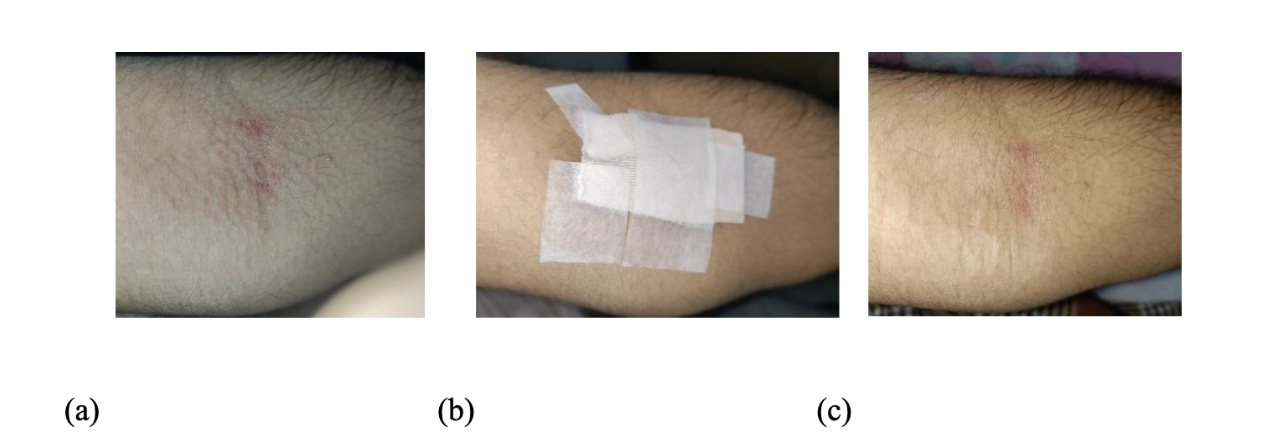
Figure 13: (a) Before Test, (b) During Test, (c) After Test
Patch test result for Food allergy after three washes (Exhausted sample)

Figure 14: (a) Before Test, (b) During Test, (c) After Test
Again, after washing the samples 3 times normally, the volunteers who have food allergy are patch tested again, the amount of rash at the test site is much less observed. The results of the patch test indicated that anti-allergic reaction was observed after administering that test patches of the treated samples.
The results of patch test indicate that the longer the patch is kept, the better the result will be against allergy.
Conclusion
The study aimed to develop anti-allergic properties in textiles using natural extracts from Indian Jujube leaves. The research demonstrated the feasibility of using Indian Jujube leaf extracts in fabric treatments through hydro-alcoholic extraction and pad-dry-cure and exhaust methods. The colorfastness to wash test showed promising results, especially for the exhaust method, with no significant color change or staining observed across various fiber types. Both pad-dry-cure and exhaust-treated fabrics showed good color retention and minimal staining, suggesting they could be applied for durable textile treatments. Patch tests on volunteers showed a reduction in allergic reactions to dust and food allergens after treatment with Indian Jujube leaf extract. The anti-allergic properties remained effective even after washing, indicating good durability. The findings offer a vitalextr step forward in developing eco-friendly and non-chemical alternatives for hypoallergenic fabrics. Further research should focus on optimizing the extraction process and exploring the long-term performance of treated fabrics in real-world conditions.
References
- World Health Organization (WHO). (2022). “Allergy.” [Available](https://www.who.int/news-room/fact-sheets/detail/allergy) [Accessed: 20-Aug-2024].
- K. Singh, R. Patel, and S. Verma, “Anti-inflammatory and anti-allergic activities of Ziziphus mauritiana leaf extract: A phytochemical analysis,” Biomed. Sci., vol. 35, no. 8, pp. 454-460, Aug. 2023.
- Singh, R., Sharma, P., & Kumar, A. (2016). Flavonoids from Ziziphus mauritiana: A promising agent for mast cell stabilization. Journal of Ethnopharmacology, vol. 194, pp. 856-860.
- Sharma, V., Kaushik, N., & Jain, S. (2018). Anti-allergic potential of Ziziphus mauritiana leaf extract: An in vivo study. Indian Journal of Experimental Biology, vol. 56, no. 4, pp. 285-290.
Scan to view extended visuals and experimental images related to this study-