Md. Abir Hossain Hasib, Khulna University of Engineering & Technology, Khulna
Abstract: The environmental impact of petroleum-based synthetic textiles has intensified the demand for sustainable alternatives We are slowly learning how to make materials the way nature makes materials, which also means they are much more impactful to the environment and much safer for us. The core of the problem really is, if we look around us, a huge fraction of what’s probably in our sight line is either fully or partially petrochemical derived, and it includes the things we are wearing. The flip side of this is there is increasingly, a very clear need to solve this problem. Clothing is a particularly most important one because of how connected it to us. Bio-based textiles, extracted from different things such as algae, mushrooms, and agro-industrial waste, present a viable pathway toward eco-friendly and circular textile systems. This article reflects about real-world applications of bio-based textiles, while addressing key challenges such as scalability, cost, and consumer acceptance. Finally, potential future of fabrics is also discussed, emphasizing the role of biotechnology, policy frameworks, and industry collaboration in mainstreaming bio-based textiles.
Keywords: Biodegradable, Chitosan, Microorganism, Mycelium, Algae, Ecosystem.
Introduction : Imagine wearing a sleek leather jacket that is actually not a leather itself, grown from mushrooms or a flowing wearable dress shorn from seaweed. This is not a children’s tale – it’s the future of fashion. The global textile industry is in the age of must transformation strategy towards sustainability. As the textile industry grapples with pollution problem, bio-based textiles, crafted from renewable sources like algae, fungi, and bacteria, are promising as a revolutionary solution. These innovative materials promise to transform the petroleum-based textiles as well as shifting the consumer’s mindset of how we dress, joining sustainability with style. In a world facing a massive loss on fast fashion’s waste, bio-based textiles offer a lifeline—a greener, smarter way to clothe ourselves.
The Problem with Fashion’s Fabric: The textile industry is a juggernaut, contributing in a production of over 100 billion garments each year. Yet, it’s a major sector that is responsible for 10% of global carbon emissions and 20% of wastewater [1]. If we look around, everything we wear today has obviously undergone some chemical treatment. Depending on what garments we wear, it could have undergone 10 to 15 industrial treatment and all of those involve chemicals. And from those chemicals at least the vast majority will be petroleum based. Even if we are wearing something cotton The Cotton might be organic but to get from the fiber to the shirt the trouser we’re wearing, still have to go through all these industrial processes. so, while it’s fashion, it’s also an industrial product. In the industrial stage chemistry is used in almost every single stage. 80% of today’s garment is either polyester or polyamide. Alternative solution of this fast fashion synthetic material is bio-based sustainable textiles. From algae-based yarns to mushroom leather, the future of fabric is offering eco-friendly alternatives that don’t sacrifice or quality.

3.0 Bio-Based and Biodegradable Fibers:
Biodegradable polymers and fiber products have become very significant, because traditional fibers are polluting the biological environment when exposed to nature (Shen et al, 2014) [2]. This pollution has a significant impact on carbon emissions in the production process. Also, it has no degradability of its waste (Meereboer et al,2020) [3]. So, bio-based and biodegradable fibers can reduce carbon emissions and improve our mother nature.
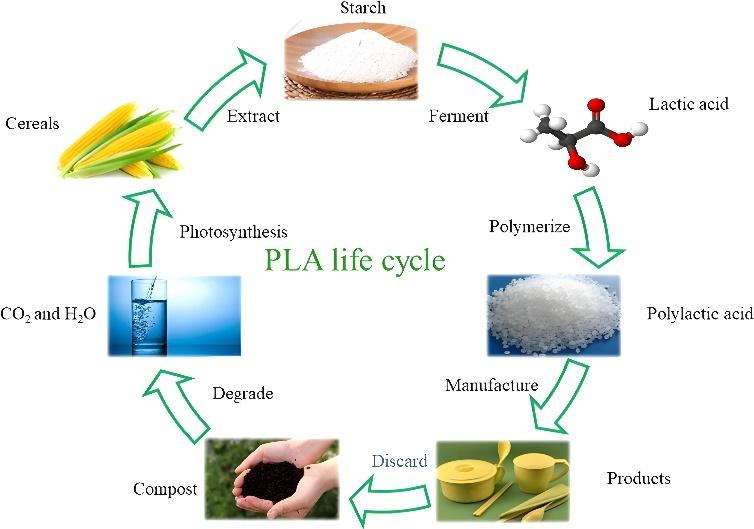
3.1 Polylactic Acid (PLA): it can be naturally degraded by the hydrolysis of pistol bonds presented in the soil. In addition, actinomycetes, a microorganism will accelerate its biodegradation. PLA fiber is widely used in food packaging and textiles electronics industries. it is a well-known bio-based and biodegradable material. (Qi et al,2019) [4].
3.2 Polyhydroxyalkanoates (PHA): PHA is a class of biodegradable polymers used in bioplastics, medical devices, packaging, etc. (Dilkes et al,2019) [5].
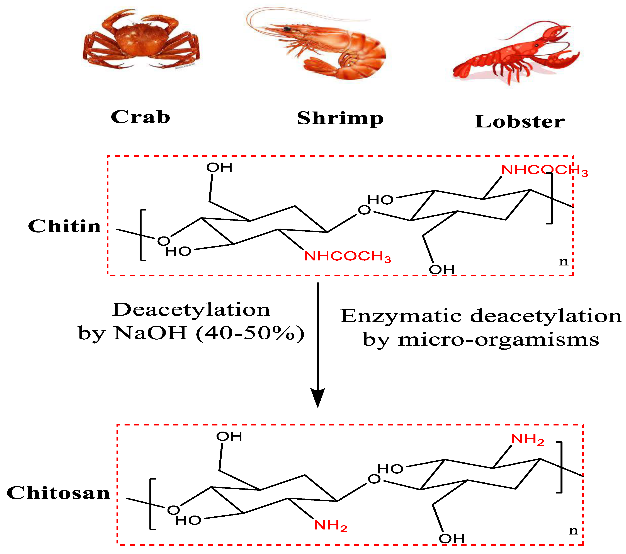
3.3 Chitosan: Chitosan is a naturally occurring polymer. It’s in anything that has an exoskeleton like shrimps, crabs, lobsters etc. and it’s in the cell walls to varying degrees of all fungi as well. Leftover shrimp heads or shells are collected and then extracted into chitosan. This chitosan polymer is the key to making future fiber which is 100% bio-based and biodegradable.
4.0 Three Generations of Raw- Materials for Bio-Based Fiber
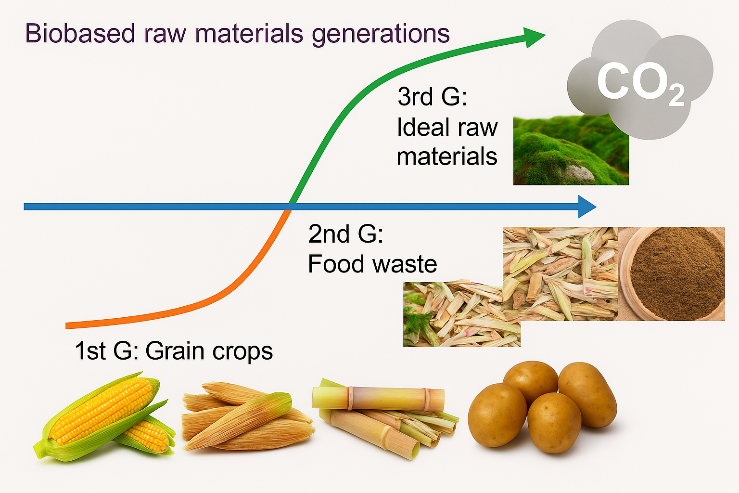
The evolution of bio-based textiles can be understood through three generations of raw materials:
1) First Generation: Grain Crops – These include corn, wheat, sugarcane, and potatoes. They are very effective for fiber production like PLA and PHA.
2) Second Generation: Food Waste and Agricultural Residues – Materials such as peanut shells, bagasse, and crop husks are used as a raw material for sustainable textile solutions.
3) Third Generation: Ideal Raw Materials (Algae, Fungi, CO₂ Utilization) – This type of materials are perfect as it can grow on marginal land or waste substrates, and even absorb CO₂. For achieve sustainability we should focus on these more.
Let’s talk about ideal 3rd generation raw materials, now.
4.1 What are Algae in Textile Production?
Algae are known as a diverse group of photosynthetic organisms, from microscopic microalgae (e.g., spirulina, chlorella) to macroalgae (e.g., seaweed, kelp). Microalgae are used in textile industry because of their high yield and their ability of producing biopolymer like alginates. This biopolymer later processed and transformed into fiber.
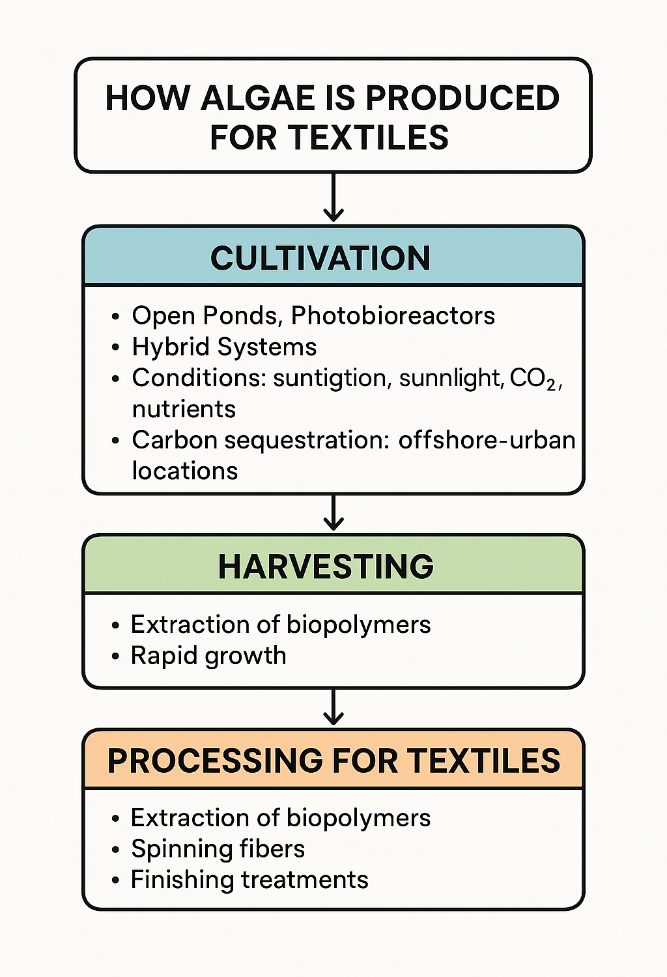
4.2 How Is Algae Produced for Textile?
Cultivation, Harvesting and then Processing. That’s how Algae is produced and collected from nature.
4.3 Mushrooms/Mycelia in Textile Production
Mycelium is currently seen as a leather alternative in textile industry. As an example, a running sweat shirt and short. A normal consumer would believe that if they start running and sweating the fiber will absorb the sweat. If we think about it the fiber can’t absorb sweat. It’s like wearing a plastic. Because it is made out of polyester. The fiber will not absorb our sweat. Quite the contrary, what the industry does is, it applies a chemical finish onto those synthetic fibers. So, they can actually absorb our sweat. This process is called wicking. Mycelium can solve this and provides an eco-friendly solution [7].
4.4 Types of Mushrooms/Mycelia Used
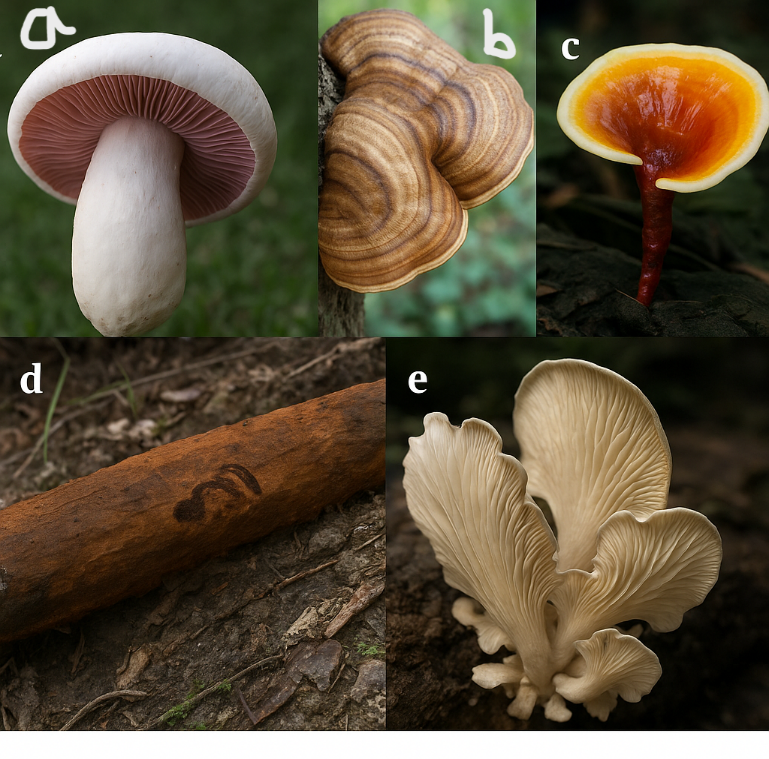
Currently white-rot fungi are considered best for production of leather substitutes and other bio composite materials [8]. Although Ascomycetes and Basidiomycetes lucidum, ostreatus, ellipsoideus and versicolor, have been identified for their significant potential in the production of leather-substitute both in the pure mycelial form or as bio composites [9].
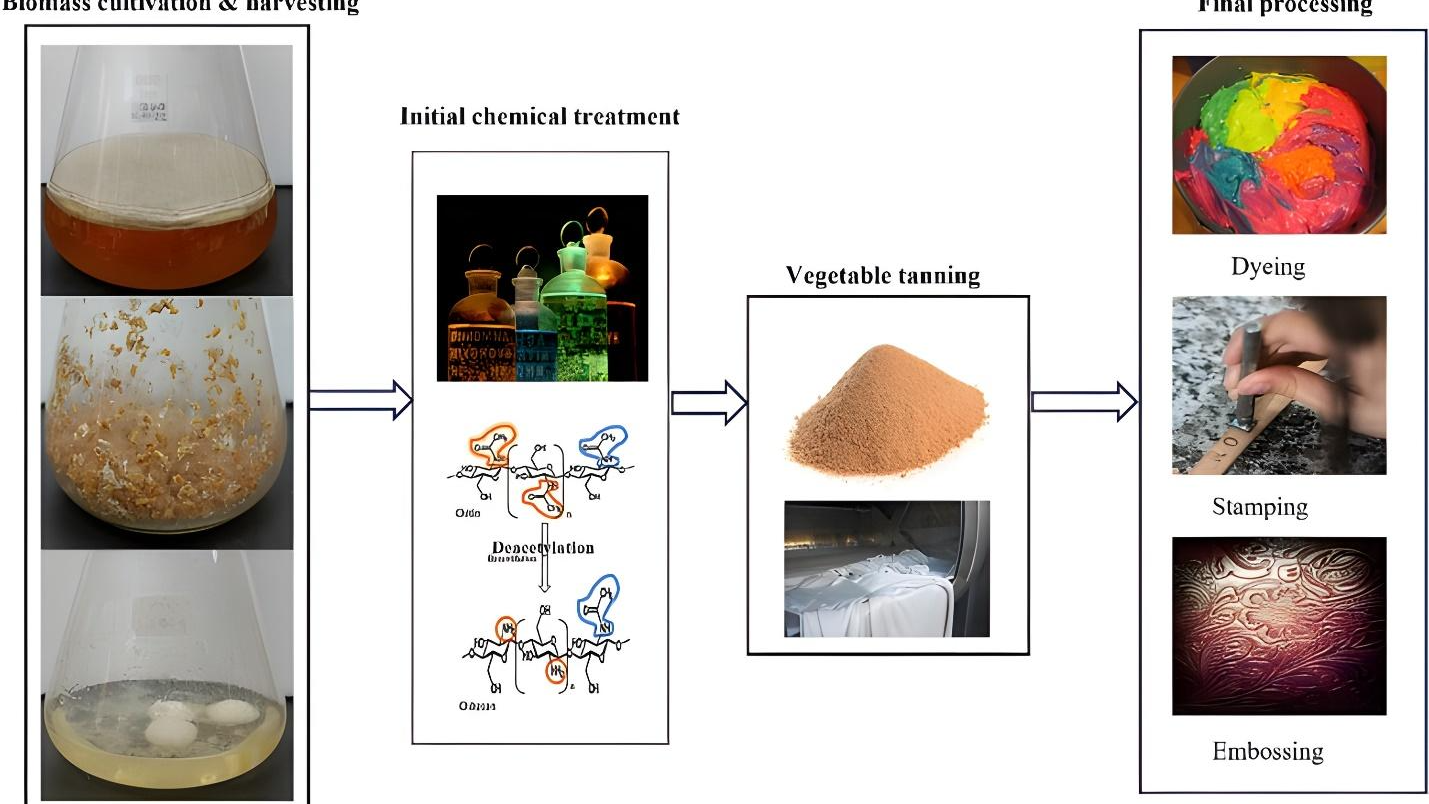
5.0 Overview of the Processing of Fungal Mycelium to Leather Substitute
This process undergoes a series of physical, mechanical and chemical transformation to get them in right shape and textures. the different combinations and variations of treatments currently in use are mainly aimed at improving pliability over rigidity, as well as increasing the durability and absorbent properties [10].
Real World Examples: Some companies and startups have already made their mark in this innovative field of future. Though they have a long way to go, the results are promising in every aspect.
Table 1: Major Fungal Leather Substitute Companies and Products.
| Company name | Country of origin | Trademarked /Brand name | Range of products | Value (USD)* | Website |
|---|---|---|---|---|---|
| Bolt Threads | USA | Mylo | Shoes, Bags, Jackets | 472.1 | https://boltthreads.com/technology/mylo/ |
| Ecovative | USA | MycoComposite, AirMycelium | Shoes, Bags, Jackets | 91 | https://www.ecovativedesign.com |
| Grado Zero Espace | Italy | Muskin | Bulk leather material | 5 | https://www.gzespace.com/ |
| Mogu | Italy | Ephea | Shoes, Bags, Jackets | 5.7 | https://mogu.bio/ |
| MycoWorks | USA | Reishi | Bags | 187 | https://www.mycoworks.com/ |
| MycoTech | Indonesia | Mylea | Shoes, Bags, Jackets, Watch straps | 1.4 | https://www.mycl.bio |
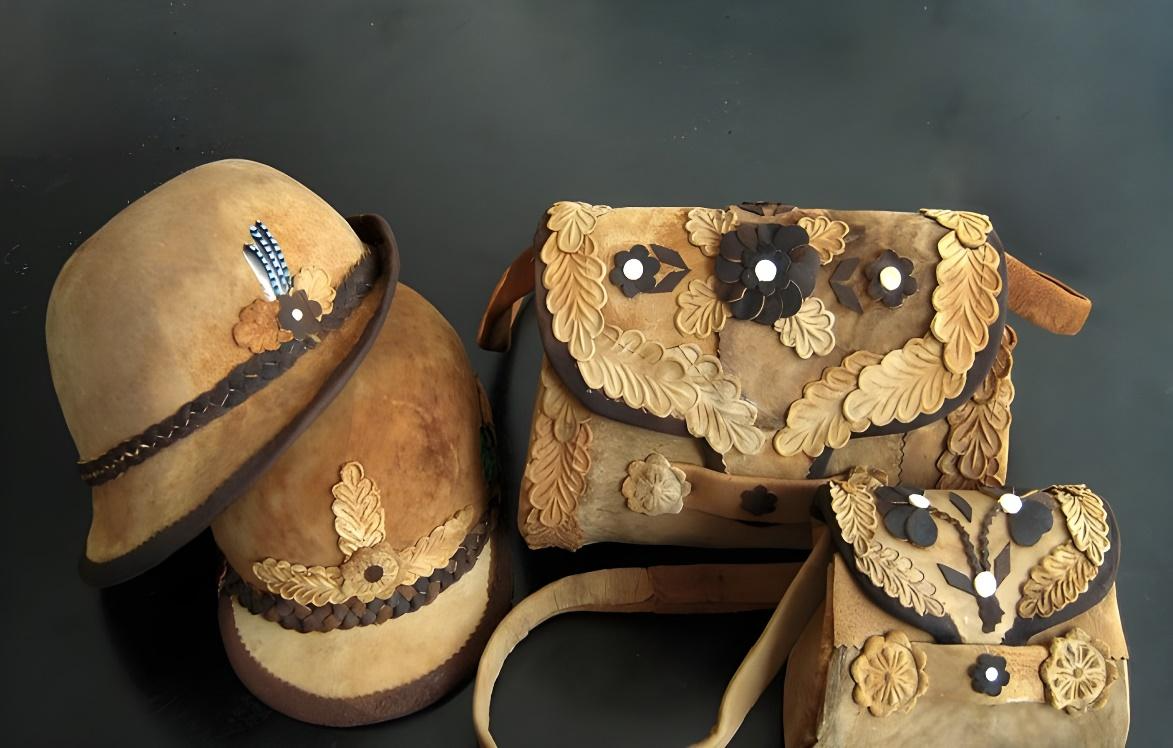
This information has taken from- [11]
7.0 Benefits of Bio-Based Textiles
- Reduced Carbon Footprint: Algae and mycelium absorb CO₂ when in the time of its growth.
- Waste Valorization: Second and third-generation materials are directly used making products and fibers.
- Biodegradability: These materials don’t pollute mother nature. Easily decomposable.
- Non-toxic Production: Production process require less chemical finishing than synthetic fiber manufacturing.
Table 2: Comparison of Petroleum Based Textile and Bio-Based Textiles
| Property | Petroleum-Based (e.g., Polyester) | Bio-Based (e.g., Algae, Mycelium) |
|---|---|---|
| Raw Material | Crude Oil | Renewable Biomass |
| Tensile Strength | High (e.g., 500–900 MPa) | Moderate (Algae: ~120–400 MPa) |
| Biodegradation Time | 20–200 years | Weeks to Months |
| Carbon Footprint | High | Low to Negative |
| End-of-life | Landfill, microplastics | Compostable or biodegradable |
8.0 The Future of Fabrics & Challenges
The future of fabrics is fully relying on bio-based, smart and circular textiles. We have to adapt these, if we really want to secure sustainable future. The world is changing, technologies are changing. People are more educated about sustainability, recycling, less carbon emissions, and zero pollution. So, this industry needs to revolutionized from the bottom to top, from first to last. Because in the upcoming future people will look for natural fibers and clothes that made with bio-based textiles.
Scalability, Cost, Durability, Consumer awareness are the key challenges that we will have to deal to achieve success. Consumers, Innovators and Policy Makers should step in together for circular economies, incentivizing sustainable materials. Bio-based textiles are set to move niche to norm as these trends converge.
9.0 Conclusion
Bio-based textiles are not just an alternative but a must be done work in the era of accelerating climate changes as well as environmental pollution, especially pollution from fabrics. Innovations using algae and mushrooms showcase the incredible potential of nature-inspired solutions. Filamentous fungi have been identified as remarkably rich and diverse groups of species, that have established themselves as promising bioresources with a wide range of industrial applications. In the long run, the expected development of the algae based fibers, fungal leather, and other bio-based textiles will be enhanced majorly by the global shift towards environmental sustainability, the availability of low-cost agricultural residues as fungal responsible fashion trends as well as government policies and regulations.
10.0 References
[1] R.A. Luken, J. Navratil, A programmatic review of UNIDO/UNEP national cleaner production centres, J. Clean. Prod., 12 (3) (2004), pp. 195-205
[2] Shen, L. (2014), ” Synthetic fiberss from renewable resources, ” in lightweight materials from bipolymers and biofibres. (Washington, United States: ACS publications), 37-52.
[3] Meereboer, K.W.Misra, M. , and Mohanty, A.k. (2020) , Review of recent advances in the biodegradability of polyhydroxyalkanoate (PHA) bioplastics and their composites. Green Chem. 22(17), 5519-5558.
[4] Qi, X., Ren, Y., and Wang, X. (2019). New adventures in the biodegradation of poly lactic acid. Int. Biodeterior, Biodegard. 117, 215-223.
[5] Dilkes-Hoffman, L.S, Lant, P.A, laycock, B., and Pratt, S. (2019). “The rate of biodegradation of PHA in the Marine environment”, A meta-Stud. Mar. pollut. Bull. 142, 15-24.
[6] https://ar.inspiredpencil.com/pictures-2023/polylactic-acid-applications
[7]J. Bustillos, A. Loganathan, R. Agrawal, B.A. Gonzalez, M.G. Perez, S. Ramaswamy, B. Boesl, A. Agarwal, “Uncovering the mechanical, thermal, and chemical characteristics of biodegradable mushroom leather with intrinsic antifungal and antibacterial properties”, ACS Appl. Bio Mater., 3 (5) (2020), pp. 3145-3156
[8] S. Manan, M.W. Ullah, M. Ul-Islam, O.M. Atta, G. Yang, “Synthesis and applications of fungal mycelium-based advanced functional materials”, J. Bioresour. Bioprod., 6 (1) (2021), pp. 1-10
[9] M. Jones, A. Gandia, S. John, A. Bismarck, “Leather-like material biofabrication using fungi”, Nat. Sustain., 4 (1) (2021), pp. 9-16
[10] S. Vandelook, E. Elsacker, A. Van Wylick, L. De Laet, E. Peeters, “Current state and future prospects of pure mycelium materials”, Fung. Biol. Biotechnol., 8 (1) (2021), pp. 1-10
[11] Amobonye , Japareng Lalung , Santhosh Pillai, “Fungal mycelium as leather alternative: A sustainable biogenic material for the fashion industry (2023)”